I was browsing Serenity Moon, a small shop in Kent, Washington that carries teaware and gifts. I asked the owner if she ever stocked gaiwans—the lidded brewing vessels central to gongfu tea practice. She shook her head. "I only carry basic glass ones. Nobody around here would buy the porcelain kind—they're too fragile to ship, and the demand isn't high enough to justify the risk."
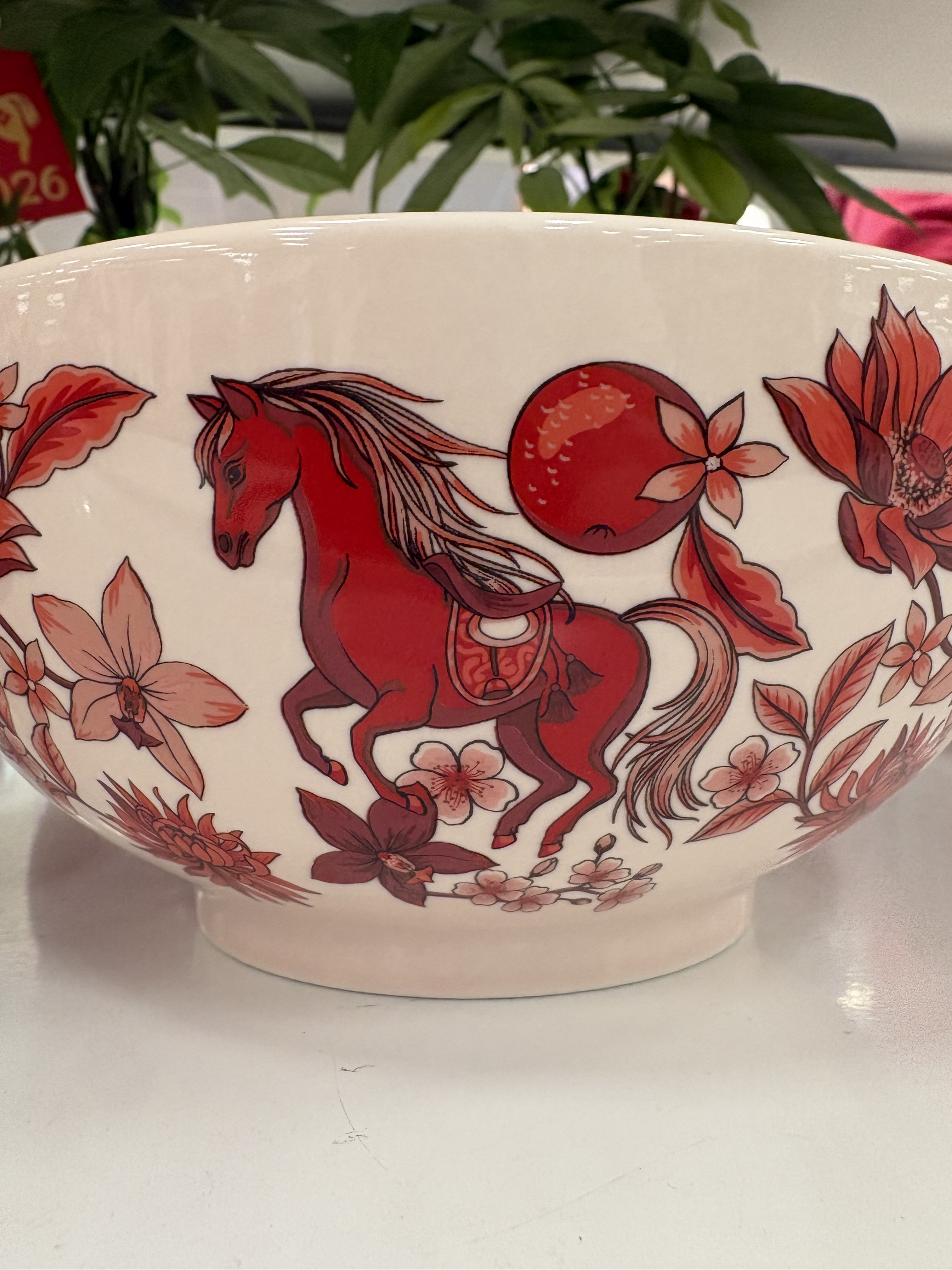
Two weeks later, I walked into Target and found a full Lunar New Year display. Porcelain gaiwans. Red packaging. Premium placement. I bought one and brought it back to show her.
She held it carefully, turning it over in her hands. Then she looked at me with something between disbelief and emotion I couldn't quite name. "This... at Target?"
What I didn't understand then—but learned in our conversation—was that her hesitation wasn't about ignorance of trends. It was shaped by decades of experience in an America that had taught her to keep Chinese culture behind closed doors.
She immigrated during an era defined by the "model minority" myth and persistent xenophobia. An era when displaying your culture too openly invited suspicion, when running an Asian business meant constantly calculating what was "safe" to sell, what might draw the wrong kind of attention. The idea that a major American retailer would dedicate premium floor space—not tucked in an "ethnic" aisle, but front and center—to Lunar New Year items wasn't just surprising to her. It represented a societal shift she never expected to see.
That moment sent me to the data.
The Numbers Behind the Display


What I found wasn't a coincidence or a trend. It was a demographic story that major retailers have apparently been reading more carefully than a small shop in Kent.
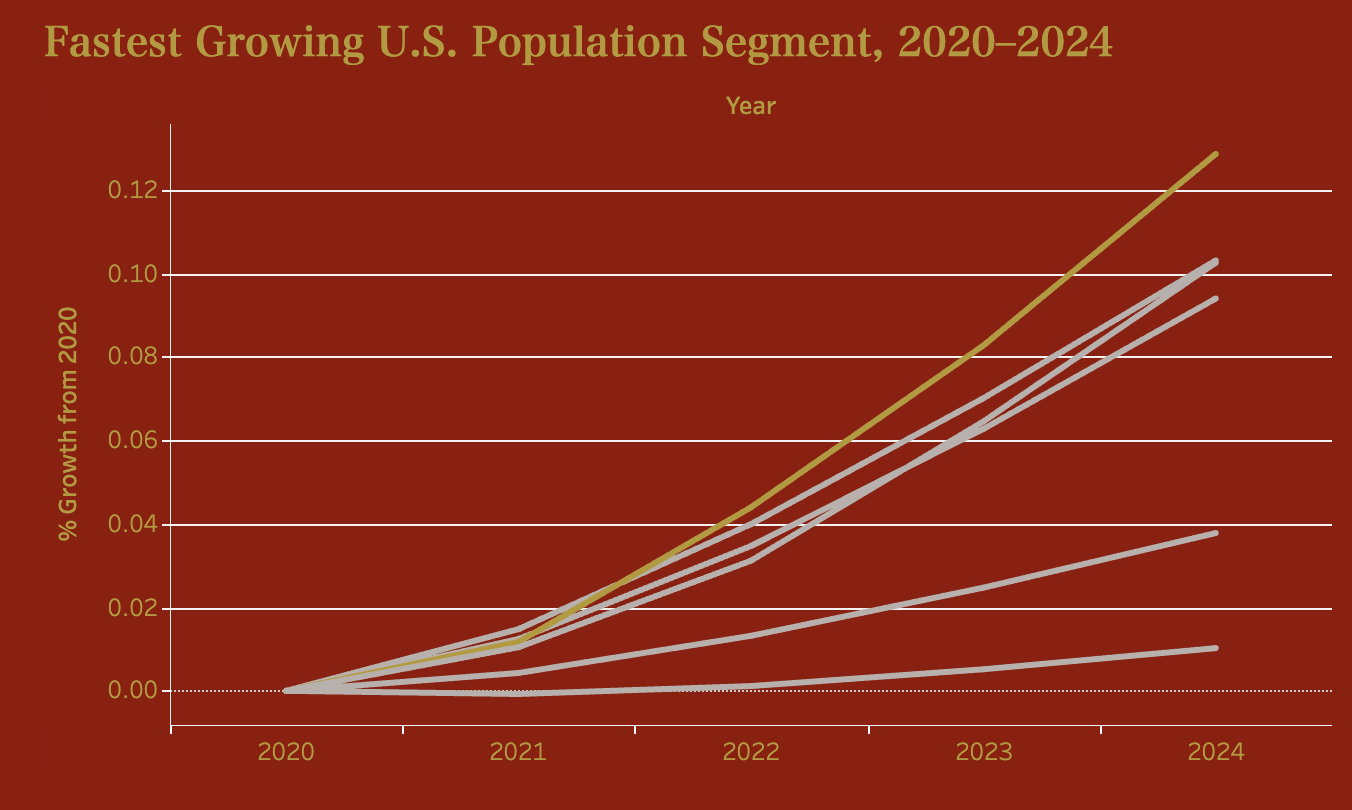
Asian Americans are the fastest-growing racial demographic in the United States. Using U.S. Census Bureau population estimates from 2020 to 2024, the pattern is unambiguous. While the White population grew roughly 1% over that four-year period, the Asian American population grew over 13%—outpacing every other racial group measured. When you index all groups to zero and plot growth rates together, the Asian line doesn't just lead. It separates.

This isn't a recent phenomenon. The Statista snapshot from 2000 to 2024 tells the longer story: Asian Americans went from 10.7 million to 22.8 million over 24 years—a 113% increase, more than doubling in a single generation.
The Search Signal
Population growth is one thing. Consumer behavior is another.
Using Google Trends data pulled via pytrends across weekly intervals from 2020 to 2025, a second pattern emerges. Search interest for "Lunar New Year" in the United States produces what I've started calling the heartbeat chart—a flat baseline punctuated by sharp annual spikes, each one timed to the holiday window.
What makes it analytically interesting isn't the spike itself. It's two things hiding inside it.
First, the "Lunar New Year" search term is steadily overtaking "Chinese New Year" as the dominant phrase Americans use. In 2020, "Chinese New Year" carried nearly equal weight. By 2025, "Lunar New Year" leads consistently. Language reflects identity, and this shift suggests something meaningful: American consumers are adopting more inclusive framing for a holiday that spans Vietnamese, Korean, and Chinese communities alike. Target isn't calling their display "Chinese New Year." Neither are searchers.
Second, the geographic distribution of that search interest is not random.
Where the Interest Lives
Geographic Search Interest
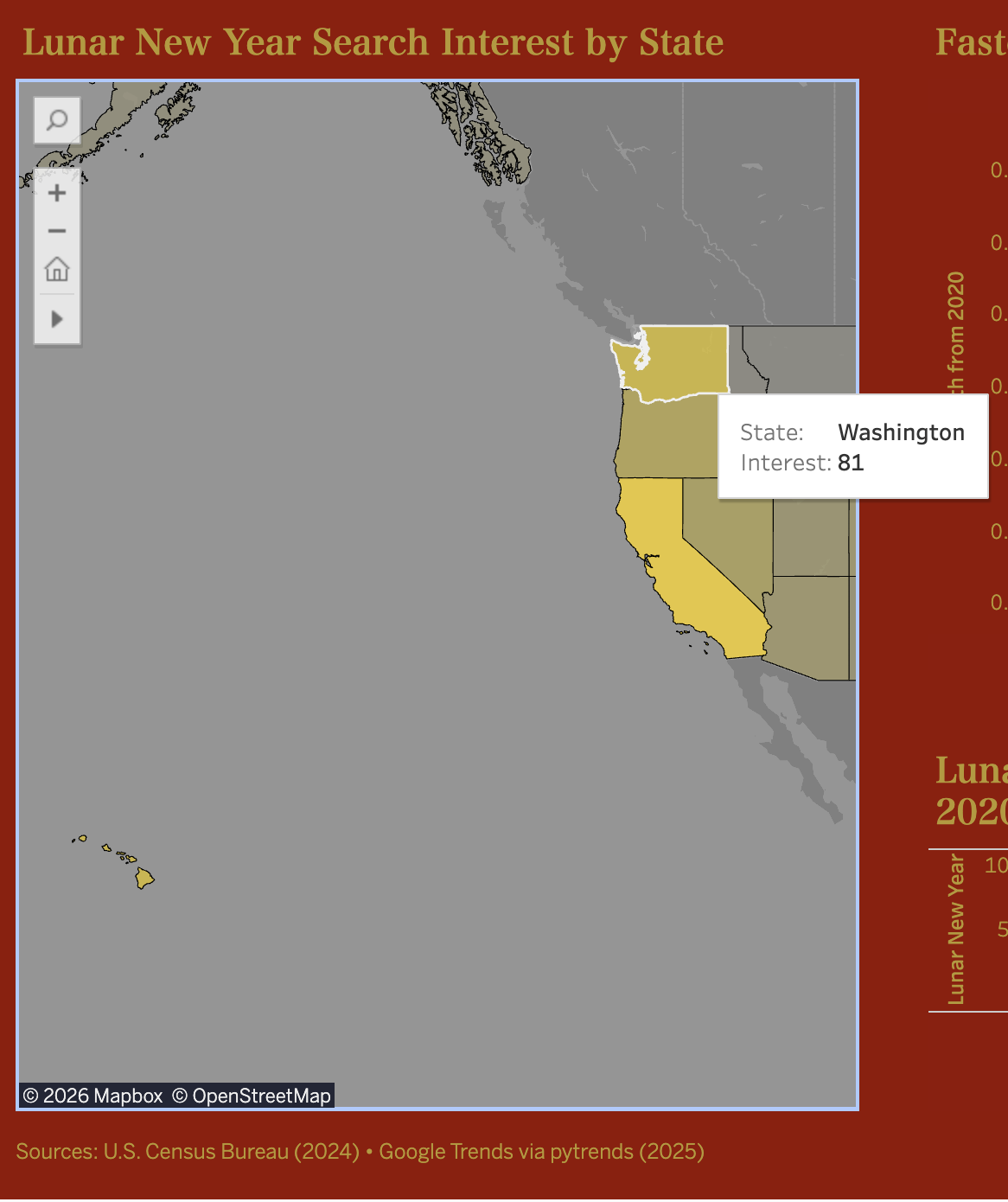
The state-level interest map tells the retail story clearly. California indexes at 100—the benchmark. Hawaii at 82. Washington state at 81.
That last number is crucial. Kent, Washington—where a shop owner learned through decades of experience to be cautious about what cultural items she stocked—sits in a state that ranks third in the country for Lunar New Year consumer interest. The demand was never absent. It was just invisible to someone without access to aggregated search data and demographic forecasting tools.
This is the gap between large retailers and small businesses. Target has teams of analysts running predictive models on consumer behavior. Small shop owners have their own experience and their customers' immediate feedback. When your experience taught you that openly displaying Chinese culture could invite trouble, that immediate feedback carries more weight than any abstract notion of "changing demographics."
The map also reveals something useful for brand strategists: interest doesn't stop at the coasts. Texas, Virginia, Maryland, Illinois, and Colorado all show meaningful scores. The Asian American consumer base is no longer geographically concentrated—it's distributed, growing, and increasingly visible to retailers with the resources to look at the data.
What the Gaiwan Means
This data project started as a curiosity and became a case study in cultural market timing—and something more personal about generational experience.
Retailers who built Lunar New Year displays in 2024 and 2025 weren't being generous or culturally sensitive in some abstract sense. They were responding to a population that grew 13% in four years, that searches in growing volume every January and February, and that is concentrated in states with significant purchasing power. The purchasing power of Asian American consumers is projected to reach $1.9 trillion by 2026. Global consumer spending during Lunar New Year reached approximately $1.5 trillion in 2023.
But here's what the numbers don't capture: the shop owner in Kent wasn't wrong about her assessment. She was speaking from lived experience in an America where displaying Chinese culture openly could invite hostility, where running an Asian business meant constant calculations about what was "safe" to stock. Her caution was survival strategy, not market ignorance.
What she didn't have access to—what small business owners rarely have—is the demographic forecasting data that retailers like Target use to make billion-dollar inventory decisions. The data that shows Asian American purchasing power grew 314% over the last two decades, far exceeding the 119% growth of the total U.S. market. The consumer research showing that 51% of Asian American consumers have higher appreciation for brands that advertise in media reflecting their culture. The predictive analytics forecasting near-double-digit growth in Lunar New Year-related consumer spending.
The gaiwan sitting in the Target aisle represents a generational shift. Her generation survived by assimilating, by keeping culture private, by minimizing difference. This generation—my generation—is seeing lion dancers at university celebrations, red envelopes in mainstream retail, and traditional teaware in premium display space.
The data tells us this shift is economically driven and demographically inevitable. But standing in that shop, watching her hold that Target gaiwan with disbelief and something like hope—that's when I understood that numbers alone don't capture what representation means to people who spent decades being told to hide.
This is why I study analytics: to understand how these numbers turn into representation, how demographic data becomes cultural visibility, and how we can use evidence to ensure these stories are never invisible again.
Data sources: U.S. Census Bureau National Population Estimates 2020–2024; Google Trends via pytrends. Dashboard built in Tableau Desktop.